
Listen to this article
How to make a suspended sliding door with a concealed track for small spaces.
Here you'll see everything in a simple way. You'll understand the advantages in small spaces, learn about easy-to-use materials and tools, follow a step-by-step guide with concealed track lighting, learn about safety and installation, see how to hide the track and achieve a beautiful finish, and get maintenance tips and advice on when to call a professional.
Key points
- Measure the opening to make sure the door fits perfectly.
- Choose a sturdy track and secure it to the ceiling at safe points.
- Hang the door on the pulleys and check if it slides easily.
- Adjust the height and screws so that the door is straight and doesn't slam.
- Install door stops or brakes to keep the door in place.
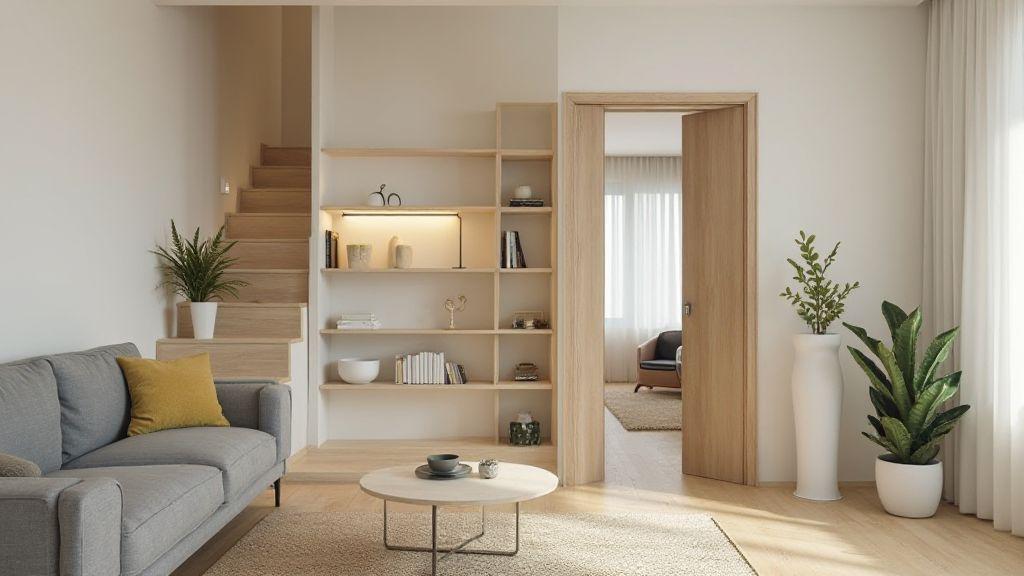
Why choose a wall-hung sliding door for small spaces?
A suspended sliding door It is secured at the top and doesn't require floor space, freeing up area for furniture and circulation. In small rooms, the clean lines of the top track and the absence of a floor stop make the space feel lighter and more fluid. Installation with hidden rail It offers an elegant and modern finish, discreet and integrated into the decor.
Advantages of a suspended sliding door for your space.
- Space saving: allows you to position furniture closer to the passageway.
- Fluidity and silence: smoother glide, fewer bumps.
- Clean look: invisible track creates a more thoughtful environment.
How the door helps with circulation and making the most of the space.
Circulation improves because there is no opening arch. If you want to learn exactly "How to make a suspended sliding door with a hidden track for small spaces," treat the project like a puzzle: choose the right door leaf, calculate the opening, and check the weight to select compatible track and pulleys.
Practical benefits
A suspended sliding door can free up approximately 0.6 to 1.0 m² in small floor plans, avoiding the typical opening arc of hinged doors (70–90 cm radius).
Materials and tools for making an easy suspended sliding door.
Knowing what you need makes "How to make a suspended sliding door with a hidden track for small spaces" simpler: track, pulleys, stops, screws, and anchors. Plan the weight of the door and choose parts with adequate capacity to avoid gaps and noise.
Materials
- RailAluminum or steel; choose a profile that allows for concealed tracking.
- Pulleys: with smooth bearings; capacity greater than the weight of the door.
- StopTo protect and limit the course.
- Screws and bushingsCompatible with concrete, masonry, or wood.
Tools
- Drill (with drill bits for concrete and wood), level, tape measure, wood saw, wrench, hammer, beam detector.
- Protection: goggles, gloves, and a stable ladder.
Choose according to weight.
- Aluminum track: for light to medium weight doors (30–60 kg).
- Steel rail: for heavy doors (60–150 kg).
- Nylon pulley: up to ~40 kg.
- Steel pulley: above 40 kg.
| Material | Common use | Typical capacity |
|---|---|---|
| Aluminum (rail) | Light to medium doors | 30–60 kg |
| Steel (rail) | Heavy doors | 60–150 kg |
| Nylon pulley | Lightweight doors | up to 40 kg |
| Steel pulley | Heavy doors | above 40 kg |
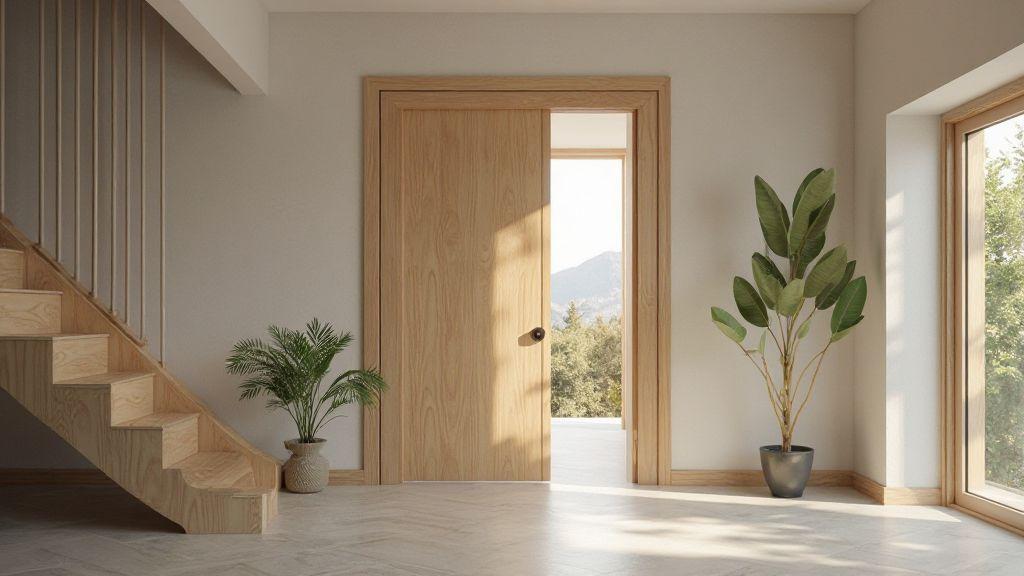



Step-by-step: suspended sliding door with concealed track for small spaces
A door with a concealed track sits discreetly in the ceiling or beam, leaving a clean look. Carefully measure the height and width of the opening—the door should cover it well, leaving a little extra space on each side for sealing. Consider clearances for the track and any irregularities in the floor.
Measurements and preparation
- Measure twice: the width of the opening, the height from the ceiling to the floor, and the lateral space.
- Mark on the ceiling where the track will be; locate beams with a detector.
- Protect the floor and have someone help you hold the door.
Essential list: tape measure, level, pencil, drill, appropriate screws and wall plugs, stud finder, gloves, door with compatible pulleys.
Track assembly and pulley installation
- Fix the hidden rail On the ceiling, mark the marks; use wall plugs or screws in the studs. Confirm the level.
- Mount the pulleys on the top of the door and fit them into the track. Adjust the height until the door is parallel to the floor.
- Install the ground guide to maintain alignment and end-of-travel lock on the rail.
Test by opening and closing several times; adjust pulleys and stops until smooth sliding occurs.
Safety and structural support
Concealed track installation requires attention to structural support. Verify that the beam can support the load: for heavy doors, the beam must support twice the weight. For drywall, plan for internal reinforcements.
How to evaluate the beam and attachment points
- Identify the type of beam (wood, concrete, metal).
- Use a stud finder and confirm the position before drilling.
- Distribute attachment points to distribute the load.
Rail and bushing fixing
- Use expansion anchors in concrete; chemical anchors for high loads; toggles in drywall.
- Drill pilot holes, clean off the dust, and insert firm wall plugs. Tighten without forcing. Test with the door empty before installing heavy panels.
Precautions: safety glasses, gloves, a stable ladder, and a partner to hold the door.
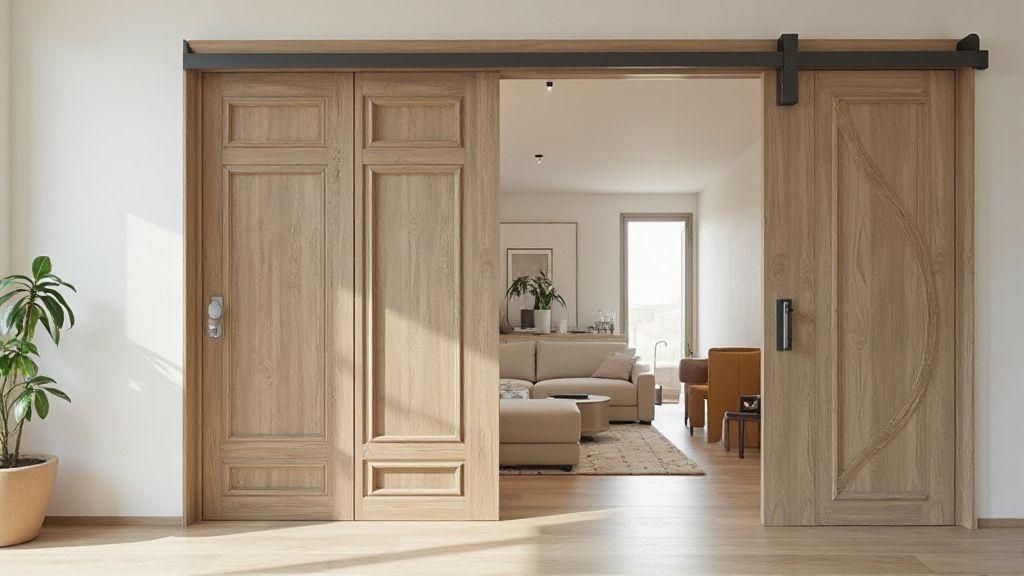
Finishing and integration into the environment
To conceal the track, embed it in the ceiling or use a drywall/MDF box; then apply filler, sand, and paint for a clean finish. Paint the recessed area the same color as the ceiling to disguise joints. Use dampers or soft-close mechanisms to prevent slamming and sealing tape to reduce dust and noise.
Choosing doors, handles and hardware
- Opt for lightweight doors (laminated MDF, hollow wood, or frosted glass).
- Recessed handles or grooves save space.
- Chrome or matte black hardware complements modern styles.
Quick tip: lightweight door with rollers, bearings, built-in handle, and damper = efficient setup.
Durable finishes
Melamine laminate, polyurethane paint, or durable varnish make cleaning easier. Avoid textures that trap dust.
Maintenance, common problems and solutions
Inspect every 3 months: clean the track, check pulleys, and tighten screws. Concealed track requires a ladder and flashlight for access.
Cleaning and lubrication
- Remove dust with a dry cloth or vacuum cleaner.
- Wipe with a damp cloth if necessary; do not soak.
- Lubricate the pulleys with silicone oil or light grease; rotate the door to spread the oil.
Problems and solutions
- Squeaking noises: clean and lubricate; replace worn pulleys.
- Misalignment: tighten the brackets on the ceiling and adjust the adjustment screws.
- Loose screws: tighten and distribute fastening points more evenly.
When to call a professional: beam reinforcement, very heavy doors, complex built-in finishes, or lack of experience with power tools.
Practical summary: How to make a suspended sliding door with a concealed track for small spaces.
- Measure the span and plan the concealed track.
- Choose a track and pulleys with a capacity exceeding the weight of the door.
- Secure the rail to beams or with suitable anchors, always keeping it level.
- Install pulleys, fit the door, adjust the height, and attach a ground guide.
- Test and adjust the stops, then finish the recess.
- Perform regular maintenance to ensure smooth operation.
Conclusion
A suspended sliding door with concealed track It's a clever solution for saving space and creating a clean look in small environments. Measure carefully, choose suitable materials, fix the track to structural points, and adjust the pulleys until the sliding is smooth. If the project requires reinforcements or is too heavy, call a professional. Go slowly and follow the step-by-step instructions for a safe and beautiful result.
Frequently Asked Questions
- What is a suspended sliding door?
A: It's a door that is suspended by an upper track, without casters on the floor.
- What materials are needed?
A: Track, pulleys, stops, screws, bushings, and the door leaf itself.
- What tools are needed?
A: Drill, level, tape measure, saw, wrenches, and beam detector.
- How to measure space correctly?
A: Measure the width and height of the opening, the side clearance for the door to open, and the height to the ceiling.
- How to make a suspended sliding door with a concealed track for small spaces?
A: Plan to embed the track in the ceiling or create a recessed box, choose lightweight materials, and ensure clearances for sealing.
- How to attach it to the ceiling without drilling too many holes?
A: Use appropriate anchors, drill pilot holes, and distribute the fixing points evenly; consider lightweight profiles whenever possible.
- How to hide the track?
A: Use a recessed plasterboard ceiling, MDF box, or straight-cut ceiling finished with plaster and paint.
- Which type of door is lighter?
A: Thin MDF, hollow wood, and certain lightweight glass options are practical choices.
- How long does it take to install?
A: A few hours if everything is cut and measured; it may take longer for built-in finishes.
- How much does it cost approximately?
A: Cost varies depending on concealed track, hardware, and labor; simple parts are inexpensive, recessed finishes are more expensive.
- How can I ensure the door slides smoothly?
A: Use pulleys with bearings, a level track, and regular lubrication.
- What mistakes should I avoid?
A: Incorrect measurements, use of unsuitable bushings, or misalignment of the track.
- How to clean and maintain the door?
A: Periodic cleaning of the track, lubrication of the pulleys, and checking of screws.
Want more ideas and tips? Visit https://dicasdereforma.com.br