
Listen to this article
How to lay foundations for a house is an essential task that deserves your attention. In this article, you'll discover the types of foundationsuch as shallow foundation and deep foundation, and understand when each one should be used. You will also learn about the materials needed, the essential tools and the stages of the foundation process. Let's talk about importance of the calculation foundation, the common mistakes to avoid and the practical tips that will guarantee the stability of your home. Get ready to get your hands dirty with valuable knowledge for safe construction!
Main conclusions
- Choose the right type of foundation for your home.
- Make a suitable excavation for the soil.
- Use quality materials for the foundation.
- Check the drainage to avoid problems.
- Follow the safety regulations during construction.
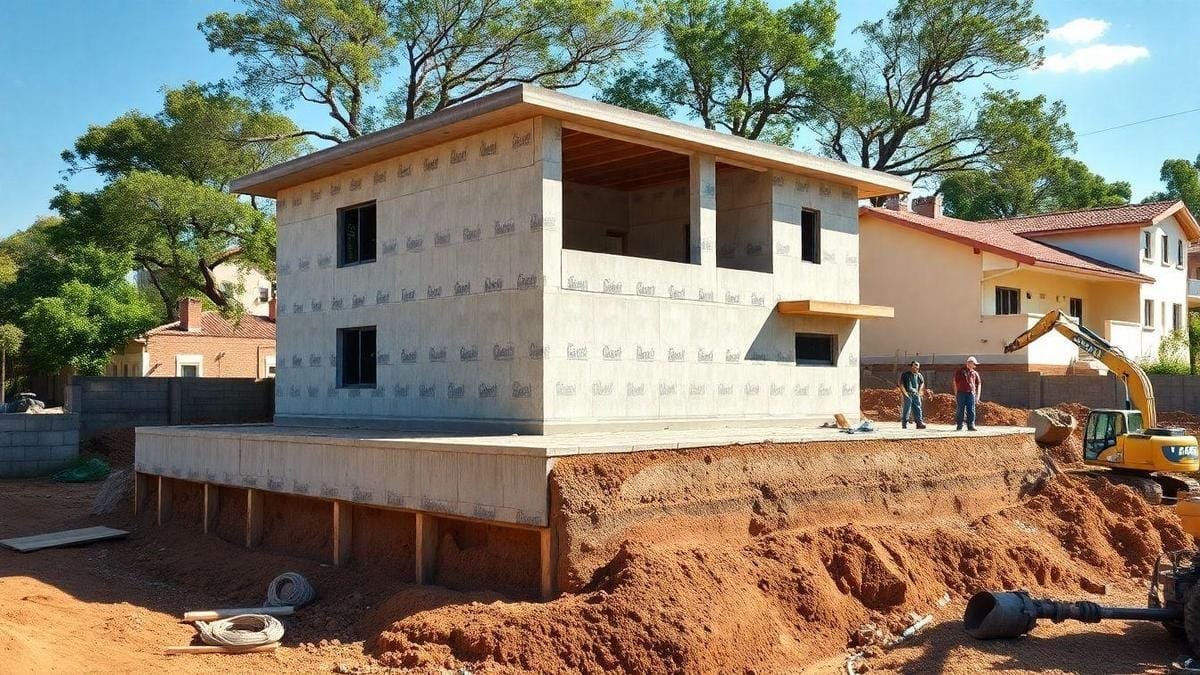
Types of Foundation for House Construction
Rasa Foundation: What You Need to Know
How to lay foundations for a house begins with choosing the type of foundation. A shallow foundation is ideal for terrain with good bearing capacity. It is simpler and quicker to make. Here are the steps and materials you'll need:
- Materials needed:
- Sand
- Brita
- Cement
- Water
- Hardware (rebar)
- Steps:
- Choose the location: Check that the ground is firm.
- Dig the foundation: The depth must be at least 0.5 meters.
- Prepare the base: Add a layer of gravel.
- Mount the fittings: They must be arranged according to the project.
- Pour the concrete: Mix cement, sand and water and pour over the fittings.
- Let it heal: Wait at least 7 days before building on top.
Deep Foundation: When to Use It
A deep foundation is necessary when the soil is weak or unstable. It extends deeper, reaching firmer layers of soil. See when and how to use it:
- Materials needed:
- Concrete
- Steel or wooden tubes
- Hardware
- Steps:
- Analyze the terrain: Do a soil study.
- Choose the type of foundation: It can be piles or tubulars.
- Dig to the required depth: This can vary from 5 to 20 meters.
- Place the stakes: They must be fixed to firm ground.
- Pour concrete: Fill the pipes or piles with concrete.
- Wait for the cure: As with the shallow foundation, let it cure for at least 7 days.
Differences between shallow and deep foundations
| Features | Rasa Foundation | Deep Foundation |
|---|---|---|
| Depth | Up to 1 meter | More than 5 meters |
| Cost | Cheaper | More expensive |
| Execution time | Quickly | Longer |
| Use | Firm ground | Weak or unstable soil |
Materials Needed for Foundation Work
Common Materials Used in House Foundations
To foundation work for building a house, you will need some basic materials. Here are the main ones:
- CementEssential for mixing concrete.
- SandUsed to give consistency to concrete.
- Brita: Fundamental to concrete strength.
- WaterRequired for mixing.
- SteelFor the frame, which supports the foundation.
These materials are the basis for a solid foundation. Their quality can make all the difference to the durability of your building.
Essential Tools for Execution
In addition to the materials, you will also need specific tools to do the job. Here is a list of the most important tools:


- ShovelFor mixing and moving materials.
- Trowel: To apply the concrete.
- LevelTo ensure that the foundation is straight.
- Concrete mixer: Facilitates the mixing of concrete.
- TrenaTo measure the correct dimensions of the foundation.
Using the right tools will make your job easier and ensure that everything stays in place.
Importance of Material Quality
A quality of materials that you choose is crucial. Poor quality materials can lead to future problems such as cracks and instability. Therefore, always opt for reliable suppliers and check the product specifications.
| Material | High Quality | Low quality |
|---|---|---|
| Cement | Quick drying | Slow drying |
| Sand | Clean and fine | Contaminated |
| Brita | Uniform | Irregular |
Choosing the right materials and tools is the first step towards a foundation that will support your home for many years to come.

Stages of the Foundation Process
Preparing the Land: The First Step
Before starting foundation of your home, you need to prepare the ground. This stage is crucial and involves some important actions:
- Land clearingRemove all vegetation, stones and debris. A clean site makes it easier to lay the foundations.
- Booking the venueUse ropes and stakes to mark out the area where the house will be built. This helps to visualize the project.
- Ground levelingCheck that the ground is level. If necessary, use a shovel or machine to level the area.
Laying the Foundation: Step by Step
Now that the ground has been prepared, it's time to lay the foundation. Follow these steps:
- ExcavationDig the place where the foundation will be made. The depth depends on the type of soil and the design of the house.
- Form LayingAfter digging, place the wooden or metal forms to shape the concrete.
- Steel armor: Insert the steel reinforcement into the forms. This gives the foundation strength.
- ConcretingMix and pour the concrete into the forms. Make sure it fills all the spaces.
- Concrete CuringAfter the concrete has been poured, it is important to let it cure for at least 7 days. Keep the area moist to avoid cracking.
Care During Foundation Work
When laying the foundation, it is essential to take certain precautions:
- Check the weatherAvoid rainy or very hot days when concreting.
- Use safety equipment: Always wear a hard hat, gloves and boots when working.
- Monitor Concrete QualityMake sure the concrete is the right consistency before pouring.
Foundation Calculation: How to Do It
The Importance of Calculation in the Home Foundation
O foundation calculation is essential for the safety and stability of your home. A well-calculated foundation supports the weight of the structure and resists ground movements. If the calculation is not done correctly, you could face serious problems, such as cracks in the walls or even the house collapsing. Therefore, understanding how to calculate the foundation is a fundamental step in construction.
Basic Formulas for Foundation Calculations
To calculate the foundation, you need to consider a few factors, such as the type of soil and the weight of the house. Here are some basic formulas:
- Foundation Area:
- Formula: Area = Total House Weight / Soil Load Capacity
- ExampleIf your house weighs 20 tons and the soil supports 2 tons per square meter, the foundation area should be 10 m².
- Foundation depth:
- Formula: Depth = Total House Weight / (Foundation Width x Soil Load Capacity)
- ExampleIf the foundation is 1 meter wide and the soil supports 2 tons, the depth must be calculated to ensure safety.
| Parameter | Example |
|---|---|
| Total House Weight | 20 tons |
| Soil Load Capacity | 2 tons/m² |
| Foundation Area | 10 m² |
| Foundation width | 1 meter |
Common Foundation Calculation Errors
When calculating the foundation, some mistakes can compromise the safety of the house. Here are the most common ones:
- Underestimating the Weight of the HouseIt is crucial to consider all the elements, such as furniture and appliances.
- Ignore Soil Type: Each type of soil has a different load capacity. Don't make assumptions.
- Not consulting a professionalAlways seek the help of a civil engineer to ensure that the calculations are correct.

Foundation Service: Manual vs. Mechanized
Advantages of the Manual Foundation Service
Do manual foundation service has its advantages. Here are some of them:
- CostManual services are generally cheaper. You don't need to invest in expensive machines.
- PrecisionManual work allows for finer adjustments. The worker can see and correct problems on the spot.
- FlexibilityOn uneven terrain, manual labor is best suited. You can change your approach as required.
Benefits of the Mechanized Foundation Service
On the other hand mechanized service also brings many benefits:
- Speed: Machines get the job done much faster. This means you can complete your work in less time.
- EfficiencyWith machines, the work is more uniform. This can improve the quality of the foundation.
- Less manpowerYou need fewer workers, which can reduce wage costs.
How to Choose the Best Method for Your Project
Choosing between manual and mechanized service can be a challenge. Here are some tips:
| Factors to consider | Manual Service | Mechanized Service |
|---|---|---|
| Cost | Generally cheaper | It can be more expensive |
| Runtime | Slower | Faster |
| Flexibility on Uneven Ground | High | Low |
| Labor requirements | High | Low |
Think about your needs and budget. If you have difficult terrain, manual service may be ideal. But if time is of the essence, mechanized may be the best choice.
Practical Tips for Home Foundation
Laying the foundations of a house is a crucial step. It is the foundation that will support the entire structure. Let's explore how to do foundation work for house construction, including the materials needed and the steps to follow.
Mistakes to Avoid During Foundation Work
- Ignore the Ground: First of all, test the soil. Knowing whether it is firm or sandy is essential. Weak soil can cause future problems.
- Don't book: Mark out the area where the foundation will be laid. This helps to avoid errors in size and position.
- Disregard drainageAccumulated water can damage the foundation. Plan an adequate drainage system.
- Using Low-Quality Materials: Always choose good quality materials. This guarantees the durability of the foundation.
Best Practices to Ensure Stability
- Choice of Foundation TypeThere are different types of foundations, such as shallow and deep. The choice depends on the type of soil and the structure of the house.
- Gravel layers: Placing a layer of gravel at the bottom of the foundation helps with drainage and stability.
- Quality concrete: Use concrete with adequate strength. The proportion of cement, sand and gravel must be well balanced.
- Reinforcement: The use of steel reinforcement within the concrete increases the strength of the foundation.
| Materials needed | Suggested quantity |
|---|---|
| Cement | 10 bags |
| Sand | 1 m³ |
| Brita | 1 m³ |
| Steel armor | 100 kg |
Final Inspection: Checking the Quality of the Foundation
After completing the service, carry out a careful inspection. Check that:
- Foundation levelUse a level to ensure that the foundation is straight.
- Cracks: Look carefully for any cracks. Small cracks can become big problems.
- DrainageMake sure that the water is flowing away from the foundation.
Conclusion
At the end of this guide, you now have a fundamental knowledge on how to do the foundation for building a house. Remember, the choosing the right type of foundation, a quality of materials and careful execution are crucial steps to guarantee stability e durability of his work.
Don't underestimate the importance of proper calculation and land preparation. These details will make all the difference to the final result. And, of course, avoid common mistakes that could compromise the safety of your building.
Now that you're equipped with this valuable information, don't hesitate to get your hands dirty and start your project. For more tips and guidance on renovation and construction, visit dicasdereforma.com.br.
Frequently asked questions
1. What is a foundation?
The foundation is the part of the house that supports the entire structure.
2. Why is the foundation important?
The foundation guarantees the stability and safety of your home.
3. How do I do foundation work for a house?
First, hire an engineer. Then dig and pour the concrete.
4. What types of foundations are there?
There are shallow foundations and deep foundations. Choose the one that best suits your terrain.
5. How do I know which type of foundation to use?
Consider the type of soil and the size of the house. An engineer can help.
6. What is the ideal foundation depth?
The depth depends on the type of soil. Generally, 0.5 to 1 meter is sufficient, but consult a specialist.
7. How long does it take to lay the foundation?
It usually takes 1 to 2 weeks, depending on the size of the job.
8. What materials are needed?
You will need concrete, steel, forms and basic tools.
9. Is it safe to lay the foundation yourself?
Not recommended. It is better to hire professionals to ensure safety.
10. How to avoid foundation problems?
Design well and choose quality materials.
11. Does the foundation influence the value of the house?
Yes, a good foundation adds value to your property and prevents future problems.
12. What to do if the foundation is faulty?
Call an engineer immediately. They'll know how to fix it.
13. Can the foundation be adapted after construction?
It's complicated, but in some cases it can be done. Always consult a specialist.